.png)


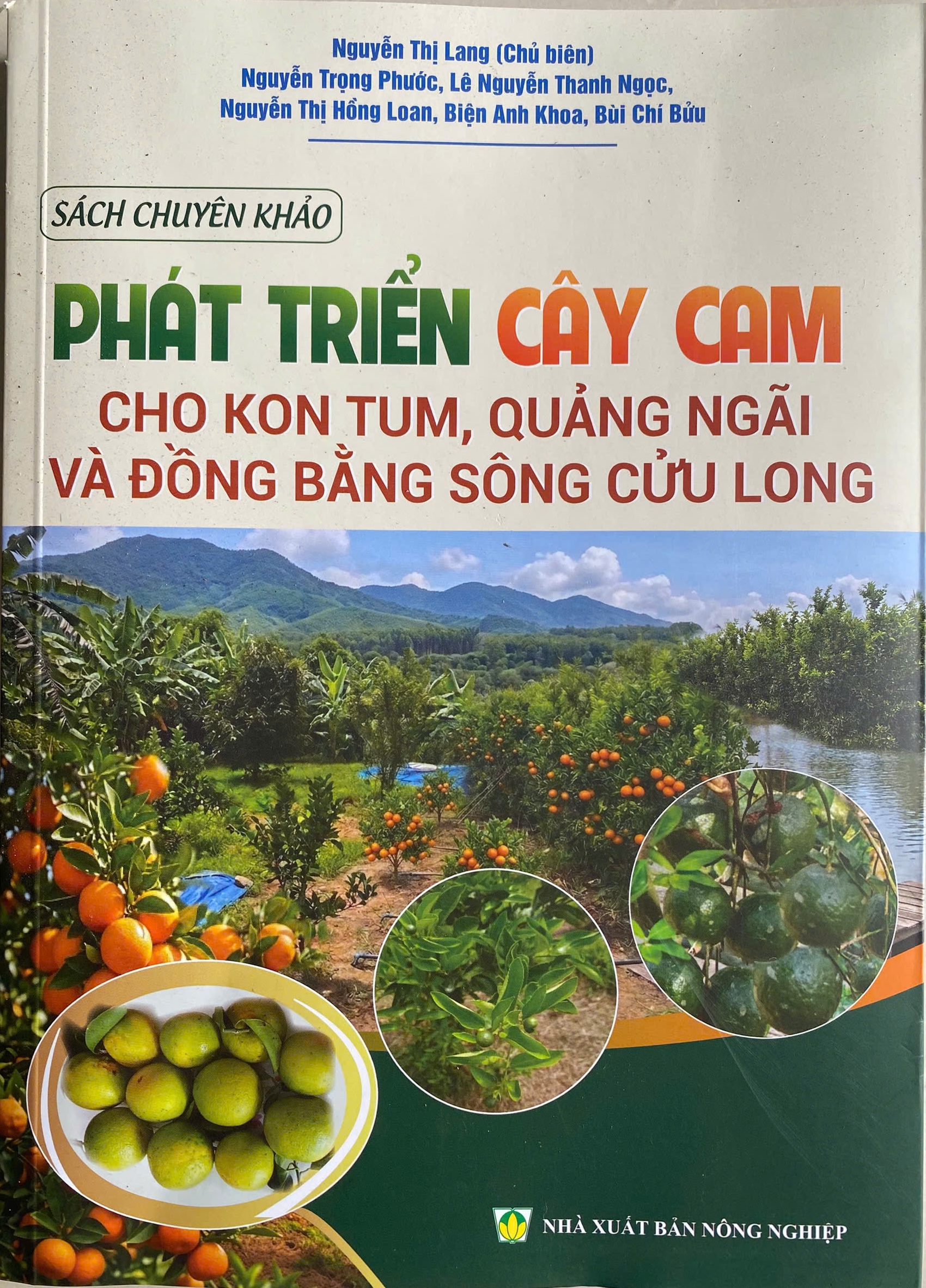
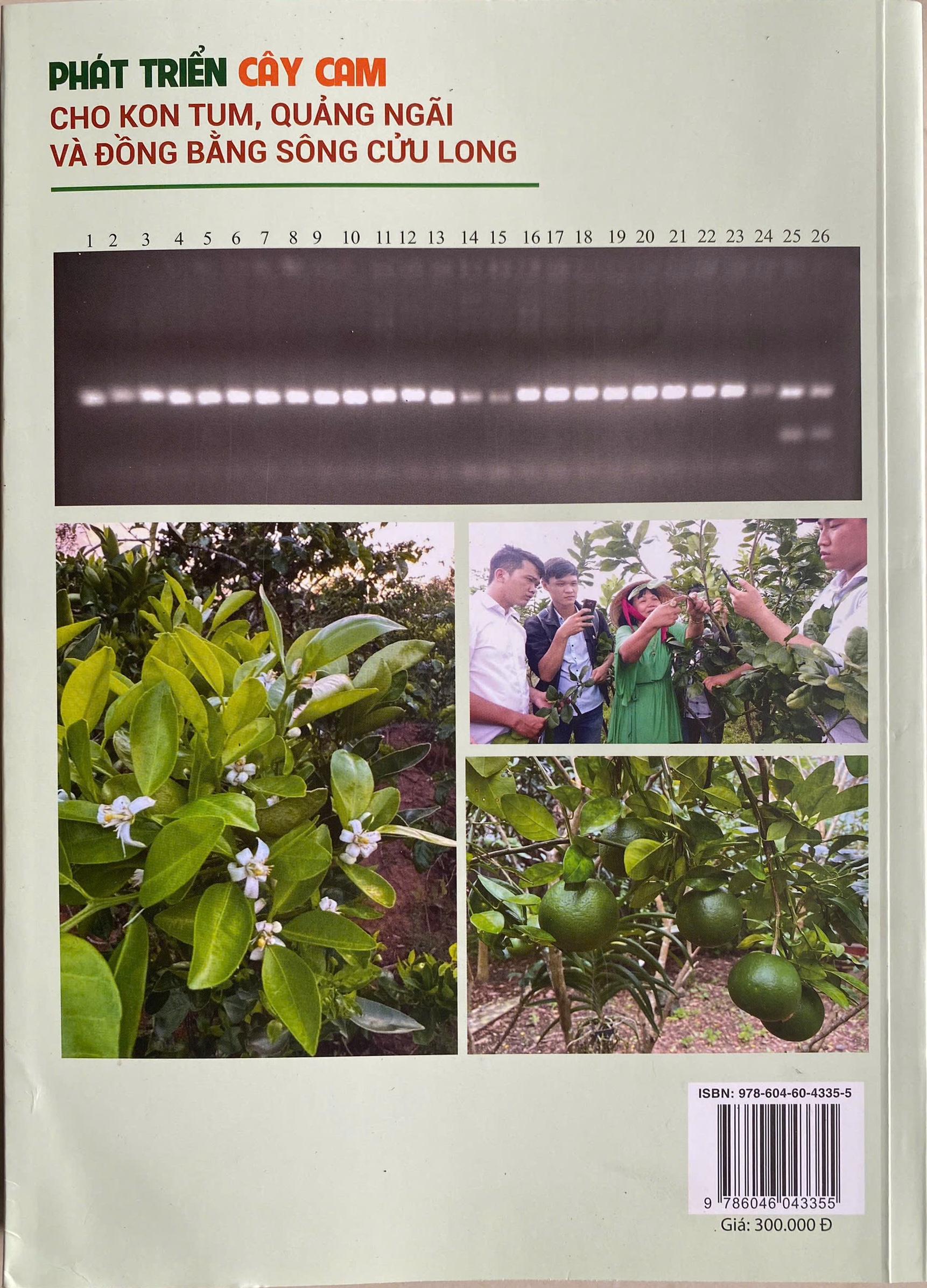
MONOGRAPH: DEVELOPING ORANGE TREES FOR KON TUM, QUANG NGAI, AND THE MEKONG DELTA
Forewords:
The demand for citrus fruit propagation—citrus being one of the most popular and widely grown fruits in tropical and subtropical regions around the world on a commercial scale—is ever-increasing. Citrus fruits are well-known for their nutritional value, quality, aroma, and appealing flavor. Furthermore, they are vital sources of vitamin C, fiber, carbohydrates, and essential minerals. The current requirement is to produce high-quality orange fruits (in terms of size, sugar-acid balance, juice yield, and seedlessness) that are healthy, rich in antioxidant compounds, tolerant or resistant to various abiotic and biotic threats, and capable of delivering high yields.To partly satisfy the demand for research access and specialized, in-depth references on orange breeding, as well as the development and application of molecular biology in biotechnology for undergraduate students, postgraduate students, university lecturers, and researchers, this monograph has been compiled.This document outlines the technical steps in breeding orange trees. Focusing on the citrus family, primarily orange trees experimentally cultivated in Kon Tum, Quang Ngai, and the provinces of the Mekong Delta, this book will introduce in detail the technical steps commonly performed during the breeding process and the methods for identifying and evaluating pests and diseases across varieties. Besides, through specifically guided technical steps, the book will help readers grasp the fundamentals of molecular biology research and development. This serves as a foundation for developing new techniques or modifying experimental steps to suit research realities.On that basis, this monograph is divided into several parts, comprising 16 chapters:
Part One - Chapter 1 to Chapter 5: Genetic Diversity of Orange Trees. The citrus tree family, which includes the orange (Citrus x sinensis (L.) Osbeck), is one of the most important crops within the citrus genus, specifically the sweet (or red) orange [Citrus sinensis (L.) Osbeck, 2n = 2x = 18]. This section provides highly detailed explanations for beginners to understand the basic principles of the workflow regarding the origin of orange trees, orange variety selection, traditional hybridization techniques, molecular techniques, and the application of biotechnology in orange variety improvement.
Part Two - Chapters 6, 7, and 8: Focuses on orange propagation, flowering stimulation, fruit setting, and seedless orange production techniques. Oranges have been propagated using grafted trees, and the rootstock plays an important role in the growth and development of the orange tree. Rootstocks affect the physiological and biochemical characteristics of the grafted varieties, including tree vigor, fruit quality, yield, and tolerance to various environmental stresses. Selecting an appropriate rootstock is one of the crucial decisions in establishing an orchard and achieving maximum profit in a sustainable manner. Furthermore, seedless oranges dominate both domestic and international markets, especially in the juice industry, making the development of seedless varieties a key objective in orange breeding programs.
Part Three - Chapter 9: Focuses on the management of major pests and diseases affecting orange trees.
Part Four - Chapter 10: Focuses on workflows and molecular markers for selecting purelines and managing orange pests and diseases.
Part Five - Chapter 11: Quality of Orange Varieties. In these research results, orange juice was successfully produced and analyzed for its physical, chemical, and sensory attributes. Sweet oranges contain phenethylamine alkaloids; the addition of C. sinensis extract is being widely used for weight loss and regulating fatty acid metabolism. The characteristic sweet orange aroma is due to a complex combination of several volatile organic compounds (VOCs), including terpenoids and fat-soluble terpenes present in the flavedo (orange peel oil).
Part Six - Chapters 12, 13, and 14: The role of fertilizers for orange trees, the impact of each fertilizer group on orange trees, and cultivation procedures for orange crops. The purpose of these chapters is to determine nitrogen fertilization methods, the impact of reduced fertilization, and planting density for orange trees.
Part Seven - Chapters 15 and 16: Post-harvest technology and preservation of orange fruits. The main causes of post-harvest losses in orange fruits can be divided into two main categories: (i) Physical losses caused by diseases and injuries; (ii) Quality losses due to metabolic and compositional changes within the fruit. With the knowledge presented in this book, we hope to provide readers with useful insights, partly offering undergraduate students, lecturers, local officials, and researchers the necessary documentation to apply in orange tree breeding. Despite our best efforts during the compilation process, this book cannot entirely avoid certain shortcomings. We highly look forward to receiving sincere feedback and contributions from our readers so that the book can be further refined in future editions. The authors would like to express their sincere thanks to colleagues who read and provided feedback to perfect this book. The author group is deeply grateful to the Department of Science and Technology of Kon Tum and Quang Ngai for providing a portion of the funding to conduct the experiments that completed the results for this book.
Sincere thanks!