.png)


HATRI news
28, Feb, 2022
Rice breeding Workshop for Climate Change at Mekong delta
On February 24, 2022, the meeting program of the Mekong Delta High-Tech Agricultural Research Institute met with Can Tho Women's Union to evaluate and select rice varieties for the Mekong Delta at Binh Thuy Center .
Prof Nguyen Thi Lang: Director of Mekong Delta High-Tech Agricultural Research Institute opens conference
“The Mekong Delta is facing worsening salinity and drought. Requirements in high-production rice production: it is necessary to have a set of salt-resistant varieties from 6-7 dS/m at the growth stage and >4 dS/m at the stage of sexual development; Survival time (SD) of rice plants at the growth stage must reach from 20 to 25 days (instead of 10-15 days); so that the rice has enough time to endure, waiting for fresh water due to the up and down tide amplitude during the month. Choosing HATRI varieties is an indispensable content in choosing to vrieties crops today.”
Climate has obvious and direct effects on agricultural production . Concerns about mitigating and adapting to climate change are now renewing the impetus for investments in agricultural research and are emerging as additional innovation priorities. In the coming decades, the development and effective diffusion of new agricultural technologies will largely shape how and how well farmers mitigate and adapt to climate change. This adaptation and mitigation potential is nowhere more pronounced than in developing countries where agricultural productivity remains low; poverty, vulnerability and food insecurity remain high; and the direct effects of climate change are expected to be especially harsh.
Currently, rice production is facing many challenges including: (i) the serious destruction by insects/pests is increasing along with the indiscriminate use of pesticides; (ii) burden on increased productivity, and the use of high-dose fertilizers; (iii) the expansion of production in the affected land is flooded and frequently dry. The combination of many methods is based on recent advances in genomic research that have been developed to deal with the above-mentioned waterfall trials and to increase the quality of rice Evaluating rice varieties resistant to flooding and salt in farmers' fields.
HATRI and the Can Tho Sub-Association wish to transfer progress in choosing to create highly sustainable rice varieties to dry and salty affected areas. This characteristic is very important and plays a decisive role in whether a rice variety is allowed to be put into production or not. A common goal in choosing to create a stress-resistant rice variety is to import the salt-resistant gene into different HATRI rice varieties the time of growth, salt resistance, and grain qualities for export that need to be achieved: “firstly, increasing agricultural productivity to support increased incomes, food security and development; secondly, increasing adaptive capacity at multiple levels (from farm to nation); and thirdly increasing new varieties for Mekong delta”. Prof Lang said
Feedback from farmers and consumers. To understand farmers' tastes, HATRI has integrated feedback in the evaluation and selection of rice varieties from many female farmers after the rice variety was selected. The process has increased the number of varieties from 20 varieties. The field trials also give a look at the gender aspect of rice production through the synthesis of feedback from female farmers. In all the experiments, farmer feedback was collected and used as a measure for improving rice breeding practices. This change has effectively brought about breeding programs, with increased genetic funds for the food supply program and for the mekong delta's rice exports.
President of Can Tho Women's Union Vo Kim Thoa was pleased to say " Very happy Can Tho Women's Union to participate in the reality of the evaluation of rice varieties organized by the Mekong Delta High-Tech Agricultural Research Institute " Hopes that you will participate in evaluating the selection of quality varieties effectively to help their lives. "
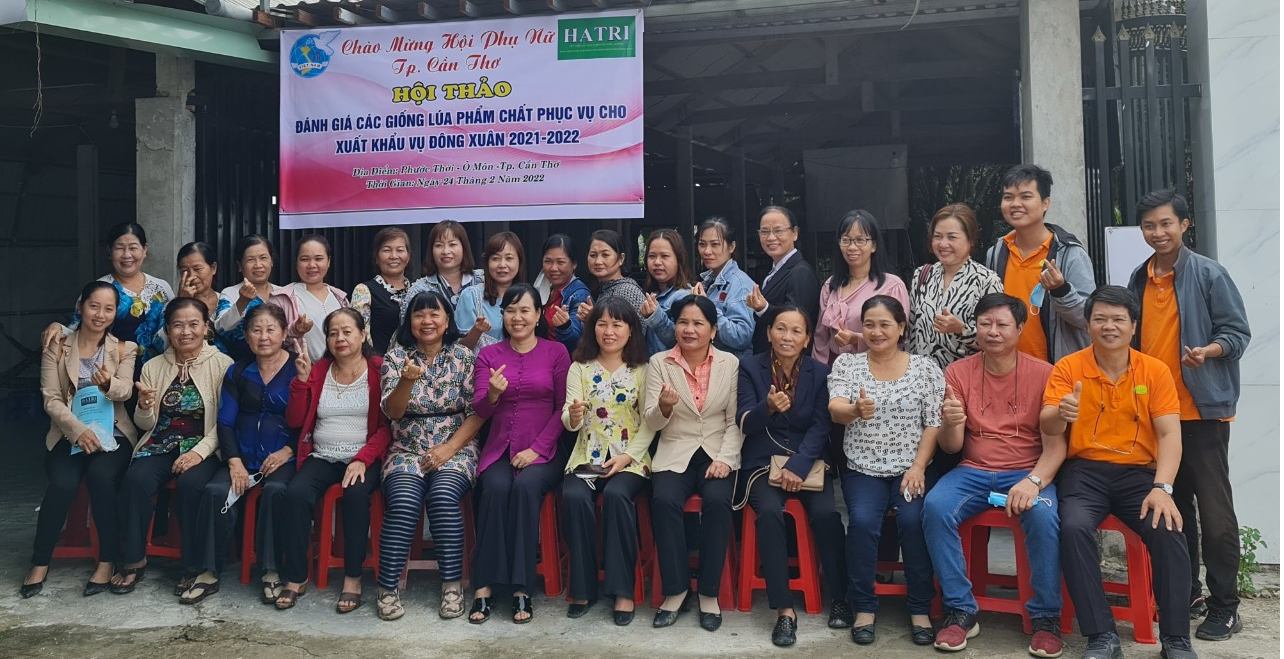
Figure 1: Can Tho Women's Union to evaluate and select rice varieties ( photo by Hoang Phuong )
These selected with 5 varieties : HATRI 10, HATRI 200, HATRI 195, HATRI 11
.png)
Figure 2: HATRI 10 at Binh Thuy ( Photo by Lang Nguyen)
.png)
Figure 3: HATRI 200 at Binh Thuy ( Photo by Lang Nguyen)
.png)
Figure 4: HATRI 195 at Binh Thuy ( Photo by Lang Nguyen)
.png)
Figure 5: HATRI 11 at Binh Thuy ( Photo by Lang Nguyen)
.png)
Figure 6: Prof Nguyen Thi Lang and President of Can Tho Women's Union Vo Kim Thoa cooperation for workshop (Photo by Hoang Phuong )


