.png)


HATRI news
29 March 2022
DAK LAK RICE VALUE IMPROVEMENT WORKSHOP AT EA KAR, MARCH 26, 2022
In 2021, the rice area of Dak Lak province will develop 111,682 hectares, producing 757,030 tons. The districts with a large area of rice and water are Krong Ana, Lak, Ea Soup, Ea Kar, Krong Plak. The area of rice and water increased and stabilized in Dak Lak thanks to the investment in irrigation works of Ea Soup Upper Lake, Krong Búk Ha Lake, Buon Yoong, Binh Hoa, Ea Yong. Dak Lak province has 785 irrigation works, including 610 reservoirs, 118 surge dams, 57 pumping stations. The total length of the canal is 2,031 km. Irrigation ensures the demand for irrigation water for nearly 150,000 hectares of crop area. The 2022 plan, Irrigation ensures proactive irrigation for over 83.28% of the crop area with irrigation needs, an increase of 0.68% compared to 2021. Prof. Nguyen Thi Lang and Bui Chi Buu were invited to participate in the discussion on the morning of March 26, 2022 after visiting the rice growing area the previous afternoon.
Chairing the workshop was The Director of Dac Lak Department of Agriculture and Rural Development, Mr. Nguyen Hoai Duong. Co-chaired by Ea Kar District Secretary, Mr. Y Nhun Byă and Chairman of the District People's Committee, Mr. Nguyen Van Ha.
Dr. Le Dang Khoa (WASI) introduces the whole landscape of Highland rice with advantages and challenges. Although the output of Highland rice only contributes 0.33% of the total sl of rice in the country, the rice here has certain advantages in productivity and quality. Dak Shake alone accounts for 51% of the central highlands' rice production.
Mr Do Xuan Dung, Deputy Director of the Department of Agriculture and Rural Development, talked about Dak Lak rice development policy. Grows area are stable rice (more than 100 thousand hectares), accounting for 34.95% of the province's annual crop planting area. Production is 750 thousand tons per year. Average rice yield is quite high: 6.7 tons / ha. The difficulty focuses on 3 contents: (1) the price of agricultural transportation; (2) small raw material areas, applying technical advances at a low level; (3) The rice industry enterprise is lacking. Le Dinh Chien, Deputy CT of Ea Kar District People's Committee proposed a solution to improve the value of rice in Ea Kar district, which has an area of 13,500 hectares of rice. Agricultural Cooperative 714 and Company 721 carry out rice processing on the spot.
Prof. Nguyen Thi Lang presented how to build a high-value rice growing area for Dac Lak, on the basis of an official project signed between the state, scientists and entrepreneurs to serve farmers. Building a sample field in Ea Kar district is the starting step of the project. Build a set of varieties for specialty rice areas. Build a high-quality field model. Building raw material areas and training training for officials and farmers.
Prof. Bui Chi Buu showed how to connect production and the market. Rice is a new element for agriculture in this coffee capital. Four proposed solutions: (1) the value chain of commodity rice production; (2) building multi-purpose cooperatives; (3) determination of raw material areas for highland rice; (4) Diversify products on the basis of "rice is a functional food" in the long run. Prof. Trinh Cong Tu, Agrochemical Institute of Pyongyang provides information on scientific research on land research for rice cultivation in the Central Highlands. There are 5 groups of land with 69,415 hectares of rice cultivation land: silt, black soil (Vertisols), valley land, gley soil, and grayish-gray soil (Acrisols). Valley land (27,299 hectares) has an average CEC. Alluvial soil (20,700 hectares) is influenced by basalt soil covering the surface, high fertility. Silvery gray soil (17,400 ha), light mechanized composition, low CEC. Black soil (3,670 ha) has a heavy mechanized composition, high CEC, high fertility. Gley soil (52 hectares) is sour soil, organic content and high multi-mineral.
Mr Ho Quang Cua introduces St24 rice varieties and nutritional needs, how to care and handle after harvest. He emphasized the superiority of the Central Highlands to the seed qualities of this variety. Ms. Vo Thi Thien Nga, Thien Anh Company emphasized "Highland rice brand", an arduous journey. She introduced Thang Binh Cooperative, built OCOP to meet the 4-star standard, exported to New Zealand. Modern logistics chain is a dream for the Central Highlands
Representing 721 Company, Mr. Tai proposed a solution to reduce costs, because the proportion of manual labor is still large in the rice industry. On behalf of Thang Binh Cooperative, Mr. Son explained more about the experiences in more than 10 years of rice production of cooperatives, thanks to the construction of a chain of links with units 721, 714. The export of rice to New Zealand is both an attempt but also a rare machine. Dr. Tran Vinh – Chairman of WASI said that "improving the value of rice crops" is the new orientation in the Central Highlands. He suggested further researching the value of "by products" of waste byproducts from straw, husks. Especially consider pesticides that are in a state of abuse and misuse. Vo Thanh Toan, BVTV Spraying Drone Service Company, introduced the results of cooperation with HTX714, Thien Phu Cooperative. The machine saves 31% of BVTV medicines on the basis of programmed equipment.
Mr. Nguyen Van Ha, Chairman of Ea Kar District People's Committee proposed to raise the standard from OCOP to VietGAP and then Global GAP for rice products of the District.
Final
Representatives of the four parties of DakLak Provincial Department of Agriculture, Ea Kar District People's Committee, Thien Anh Company and Mekong delta Hi-Tech Agricultural Research Institute signed a cooperation agreement in the future.
Summing up the workshop, Mr. Nguyen Hoai Duong emphasized: now, rice becomes an important staple product of Dak Lak. The province is building mechanisms and policies to serve this industry. In particular, the construction of the rice value chain. The province advocates not to evenly divide the support budget for units in the province, but to have reasonable priorities, focus investment, the focus of the workshop is very successful both in terms of content and participants, with very specific contributions.
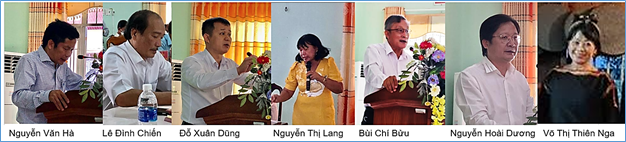
Figure 1: the rapporteurs ( Photo by Lang Nguyen and BCBuu , March 26, 2022)
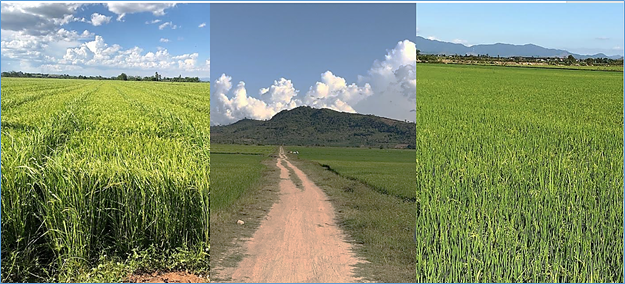
Figure 2: Hybrid rice production, model shore for motor vehicles transporting rice and sample fields in Ea Kar. BC Buu photo, afternoon March 25, 2022
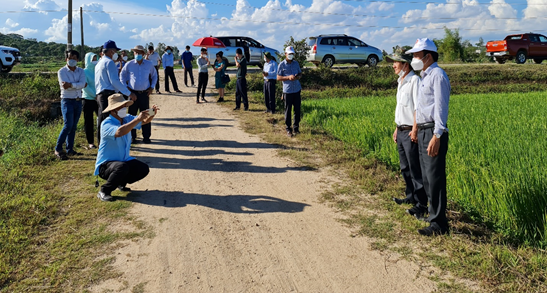
Figure 3: Field discussion in Ea Kar. Lang Nguyen photo, afternoon of March 25, 2022.


