.png)


WORKSHOP ON EVALUATING EXPERIMENTAL RICE VARIETIES FOR SALINE REGIONS
Workshop on Evaluating Experimental Rice Varieties for Saline Regions under the Project:
“PRODUCING RICE VARIETIES TO OPTIMIZE GROWTH IN THE MEKONG DELTA AND OTHER REGIONS UNDER CLIMATE CHANGE CONDITIONS”
“PRODUCING RICE VARIETIES TO OPTIMIZE GROWTH IN THE MEKONG DELTA AND OTHER REGIONS UNDER CLIMATE CHANGE CONDITIONS”
At 1:30 PM on October 15, 2026, the High Agriculture Technology Research Institute for the Mekong Delta (HATRI), in coordination with the Ca Mau Provincial Agricultural Extension Center, organized the workshop “Evaluating Rice Varieties for Climate Change Adaptation.” The event was chaired by Professor Dr. Nguyen Thi Lang and is part of the project “Producing rice varieties to optimize growth in the Mekong Delta and other regions under climate change conditions,” funded by the VinFuture Foundation.
The demonstration workshop for the experimental research rice varieties was held at Seed Farm 2, Hamlet 10, Khanh Lam Commune, Ca Mau Province. The featured rice varieties included: HATRI 806, HATRI 20, HATRI 917, HATRI 80, HATRI 924, OM 4900, HATRI 675, HATRI 923, HATRI 608, HATRI 993, HATRI 935, HATRI 661, HATRI 921, HATRI 929, HATRI 22, and HATRI 400, all of which are adapted to the current adverse conditions caused by climate change.
The objective of the workshop was to select and breed high-yield, high-quality rice varieties to supplement the existing seed collection and diversify local supply to serve regional production needs. Crop yield and grain quality are the primary traits typically studied by plant breeders. Global climate change has also directly impacted both the environment and crop production.
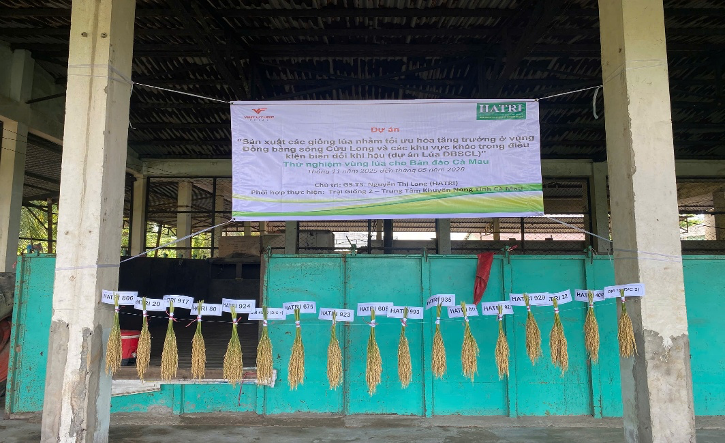
The demonstration rice seed collection of the High Agriculture Technology Research Institute for Mekong Delta
HATRI Institute was honored to welcome the participation of representatives from the Ca Mau Provincial Agricultural Extension Center and local rice farming households.
During the workshop, farmers directly visited the fields to inspect and evaluate the experimental rice varieties for saline regions. Practical evaluations showed that the experimental rice varieties grew and developed well, exhibited good resistance to pests and diseases, possessed large and long panicles, and achieved a high filled-grain ratio.
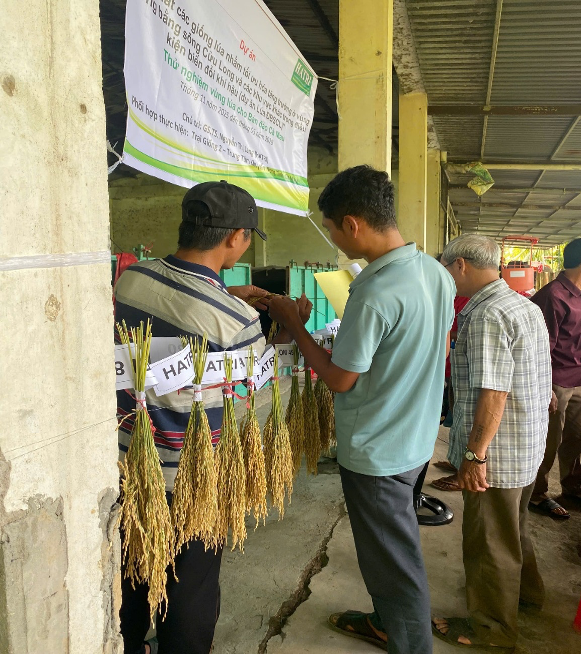
Farming households evaluating the experimental rice varieties
Following the direct evaluation of the rice varieties, Prof. Dr. Nguyen Thi Lang – Project Leader and Director of the High-Tech Agriculture Research Institute of the Mekong Delta (HATRI) – delivered a speech introducing the rice varieties bred by HATRI. She highlighted their outstanding climate resilience and compatibility with the farming conditions of the Ca Mau Peninsula, showcasing superior standards in growth, development, yield, and quality. Notably, the Institute is also researching rice varieties related to emission reduction in rice cultivation, which is currently a highly focused topic.
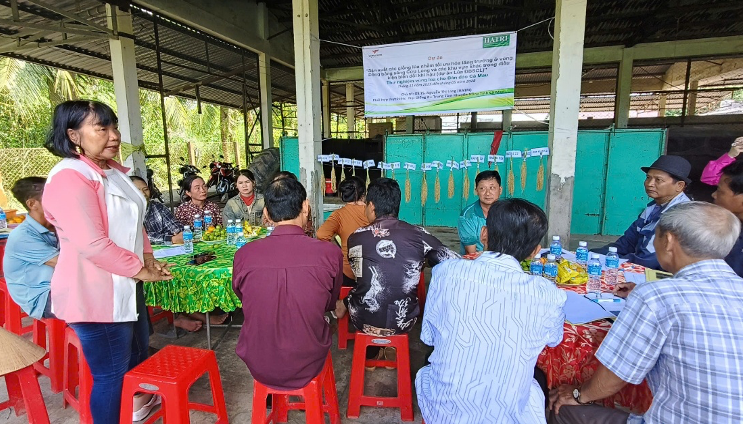
Prof. Dr. Nguyen Thi Lang introducing the selected experimental rice varieties
According to Mr. Le Van Khac (Head of Seed Farm 2 - Ca Mau Agricultural Extension Center): “Through the cultivation of these experimental rice varieties, the seed collections have been highly rated for their pest and disease resistance, sturdy stalks, and relatively good yields, with HATRI 20 and HATRI 675 standing out significantly.”
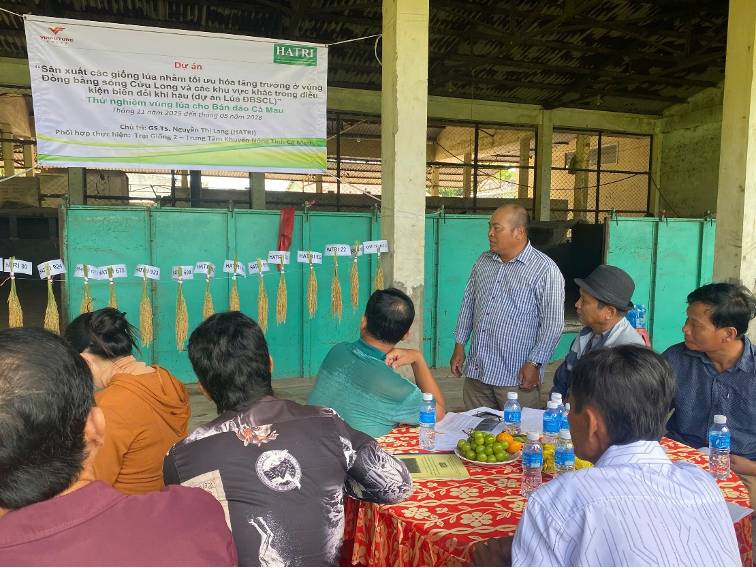
Representative Mr. Le Van Khac - Head of Seed Farm 2, Ca Mau Agricultural Extension Center
Mr. To Van Du (a local rice farmer) shared: “After evaluating the Institute's promising seed collections, I am very fond of these varieties, especially HATRI 675, HATRI 20, and HATRI 923, because they deliver high yields, a high filled-grain ratio, and a high number of tillers per hill.
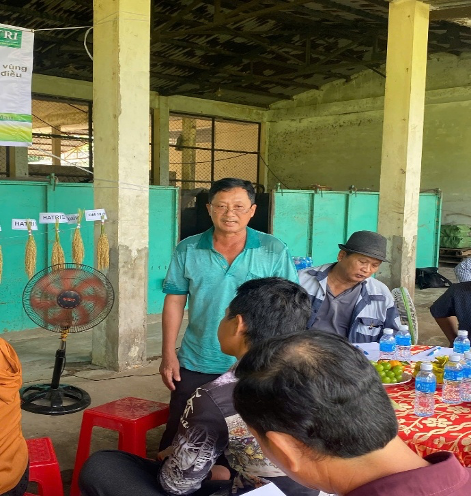
Mr. To Van Du, a local rice farmer
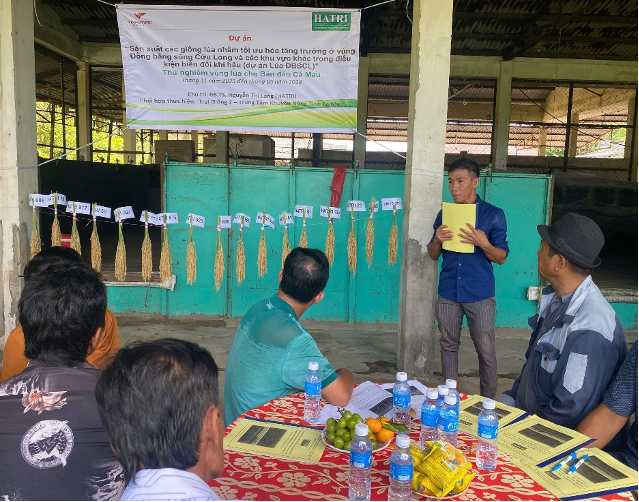
Mr Bien Anh Khoa answering questions from the rice farmers
The workshop also recorded numerous feedback contributions from rice farmers to further refine the seed collection for the research areas. Based on the farmers' evaluation results, several varieties were deemed highly promising, including: HATRI 20, HATRI 675, HATRI 923, HATRI 921, and HATRI 611. Below are images of the highly-rated rice varieties:
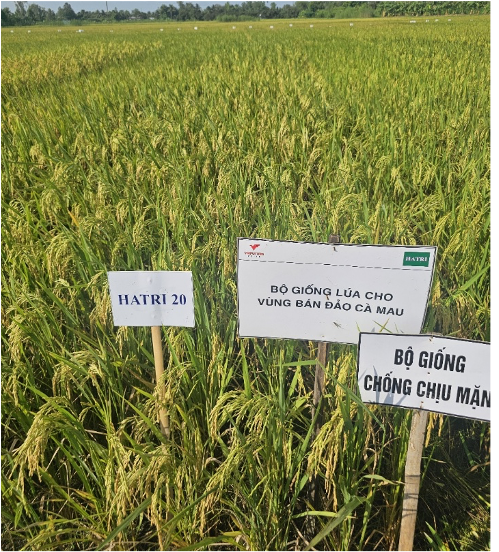
• HATRI 20 Rice Variety
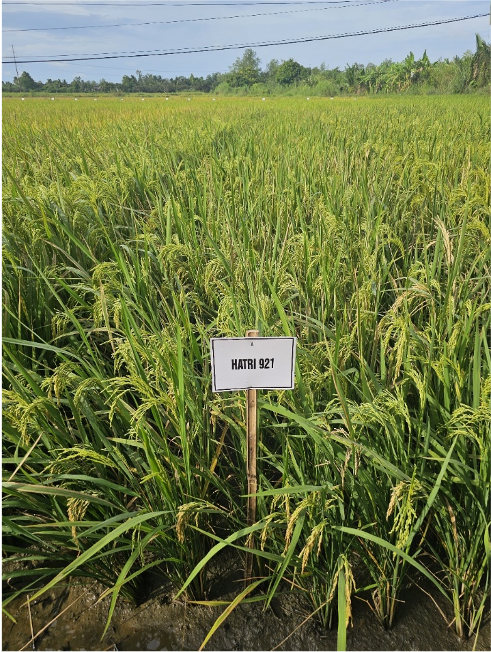
• HATRI 921 Rice Variety
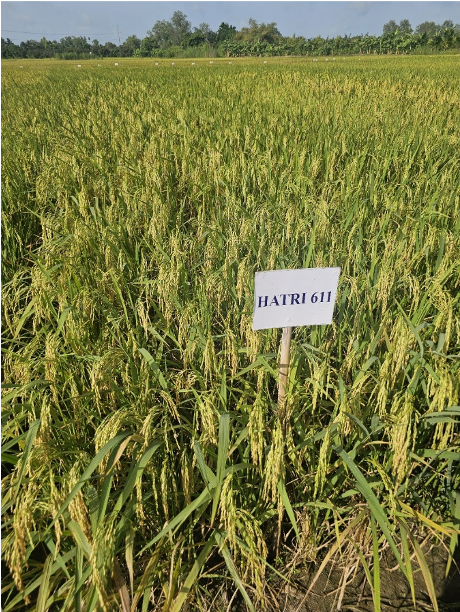
• HATRI 661 Rice Variety
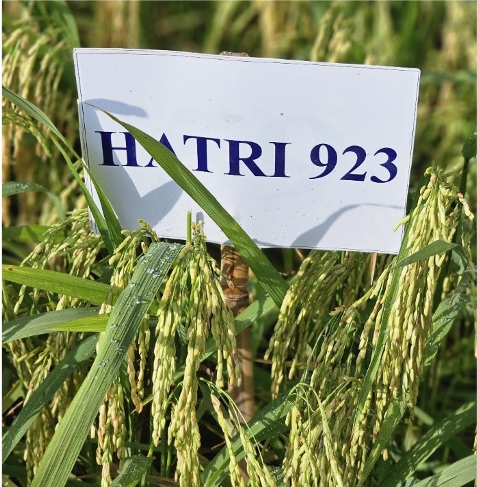
• HATRI 923 Rice Variety
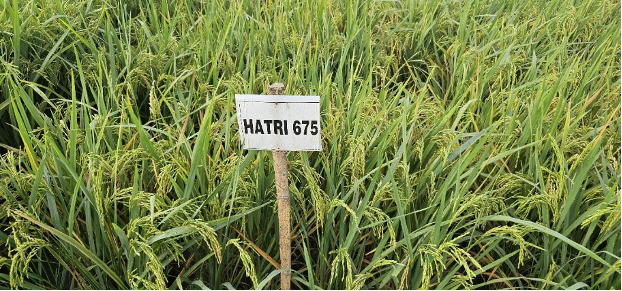
• HATRI 675 Rice Variety
Concluding the workshop, Prof. Dr. Nguyen Thi Lang – Director of HATRI Institute – assured the farming households that the Institute stands ready to support them with seed sources. She emphasized that the rice plant is not only an essential food source but is also deeply tied to the lives, livelihoods, and futures of farmers. Prof. Dr. Nguyen Thi Lang stressed that for Vietnamese rice to reach further globally, farmers need access to scientific and technological advancements, shifting their cultivation methods toward efficiency and sustainability. Ultimately, the value of the rice plant lies not just in yield or output, but in the quality of the rice grain, its economic efficiency, and the steadily improving quality of life for the farmers.
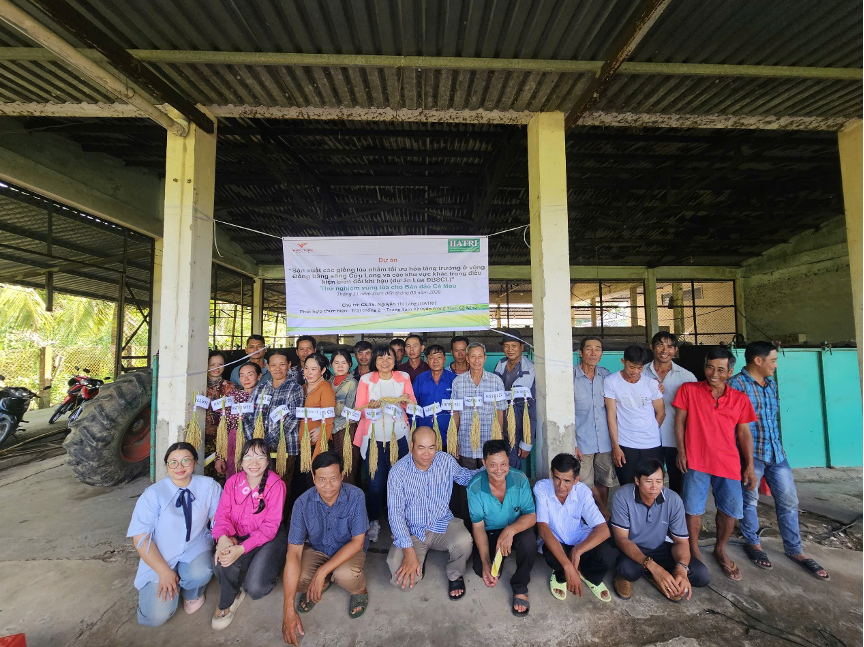
Souvenir photo of the farming households at the workshop)=
HATRI Institute would like to express our sincere gratitude to VinFuture for funding this project, enabling the workshop to be a great success.


